
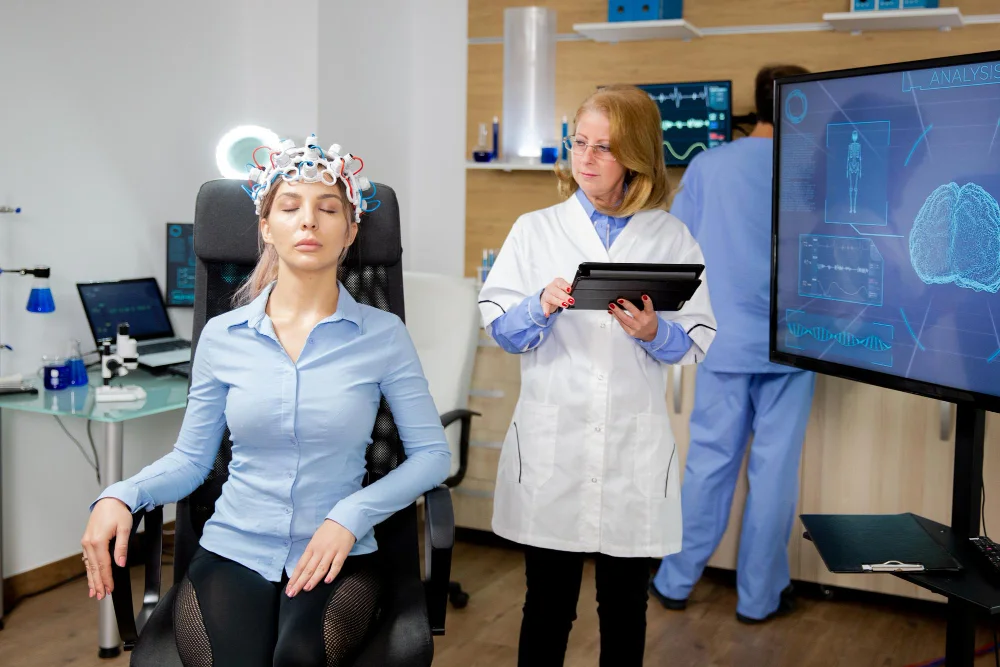
A traumatic brain injury (TBI) occurs when a sudden blow or impact disrupts normal brain function. TBIs may result from falls, motor vehicle accidents, sports injuries, or gunshot wounds. The severity of a brain injury can range from mild to life-threatening, and treatment may vary from rest and rehabilitation to advanced medical interventions.
Traumatic brain injuries are among the leading causes of long-term disability in the United States, often affecting physical, cognitive, and emotional functioning.
Even a mild TBI can lead to persistent symptoms such as headaches, fatigue, blurred vision, depression, and anxiety. More severe injuries may result in seizures, stroke, coma, or profound cognitive impairment. Many individuals require long-term treatment to manage the ongoing effects of a TBI and restore quality of life.
At Eterne Wellness, we offer advanced, non-invasive therapies designed to support brain healing and reduce long-term symptoms following traumatic brain injury
Symptoms of a TBI may appear immediately or develop days to weeks after the injury. These may include:
Headaches
Repeated nausea or vomiting
Dilated pupils
Slurred speech
Weakness or balance problems
Dizziness or loss of balance
Loss of consciousness
Anxiety or depression
Sleeping more or less than usual
Difficulty falling asleep
Seizures
Medical evaluation is essential after any head injury, regardless of severity, as TBIs can lead to serious complications including coma or death.
Some individuals experience ongoing challenges months or even years after a TBI, including:
Vertigo – Persistent dizziness or spinning sensations
Chronic headaches – Often beginning days after injury and lasting for months or longer
Memory impairment – Difficulty recalling recent or past information
Reduced motivation – Trouble initiating or completing tasks
Poor concentration – Brain fog and difficulty focusing
Behavioral and personality changes – Difficulty with impulse control or social interactions
Communication challenges – Trouble understanding speech or initiating conversations
Emotional disturbances – Depression, anxiety, mood swings, irritability, anger, and panic attacks
To help address these challenges, Transcranial Magnetic Stimulation (TMS) and Magnetic Resonance Therapy (MeRT) offer promising non-invasive treatment options.
Magnetic Resonance Therapy (MeRT) is a highly personalized form of TMS. MeRT combines:
Repetitive transcranial magnetic stimulation (rTMS)
Quantitative electroencephalogram (qEEG)
Electrocardiogram (ECG/EKG)
This advanced approach allows clinicians to identify underperforming or dysregulated areas of the brain and deliver precisely targeted stimulation, optimizing therapeutic outcomes.
Compared to traditional treatments, TMS and MeRT offer several advantages:
Non-invasive – No surgery or anesthesia required
Outpatient treatment – Convenient in-office sessions
Well-tolerated – Minimal side effects for most patients
Drug-free – No medication-related side effects
Targeted therapy – MeRT focuses on injured or dysregulated brain regions
Traumatic brain injuries can be life-altering, but advanced therapies such as Transcranial Magnetic Stimulation and Magnetic Resonance Therapy offer hope for recovery and improved quality of life.
If you are interested in learning whether TMS or MeRT may be right for you, the team at Eterne Wellness is here to help.
Contact us today to schedule a consultation or learn more about our brain health services.

Originally used as a pediatric anesthetic, ketamine has shown to be an effective drug for fighting depression. Ketamine works differently in your brain than other antidepressant medications. Conventional antidepressants such as SSRIs have to build up in your system to change your brain chemistry.

TMS therapy is a noninvasive procedure that uses magnetic pulses—similar to those of an MRI machine—to awaken parts of the brain underactive in people who suffer from depression.

We offer medication management, IV treatments, and more to feel like yourself again and get on the right track.
At Eterne Wellness, our dedicated team is committed to guiding you on a journey towards healing and liberation from the weight of depression.
(725) 895-9300
A concussion is a mild form of TBI. While many people recover fully, some experience ongoing symptoms that require professional care.
A concussion is a mild form of TBI. While many people recover fully, some experience ongoing symptoms that require professional care.
Recovery varies depending on the severity of the injury. Some patients improve within weeks, while others benefit from long-term support and rehabilitation.
Yes. Emotional and cognitive changes are common after TBI due to both physical brain changes and the stress of recovery. Our treatments target both areas for full healing.
A combination of medical management, therapy, neurofeedback, and advanced treatments like ketamine or IV infusions can significantly enhance recovery and quality of life.