
Let’s be honest. If you’re reading this, you’ve probably already tried some things. Maybe medication. Maybe therapy.
Maybe both at the same time, for years, with mixed results.
You’re not looking for another vague overview – you want to know whether this is real, whether it works, and whether it’s worth your time.
So here it is, straight.
TMS treatment for anxiety is not a gimmick. It’s not a last resort wrapped in scientific language.
It’s a legitimate, FDA-cleared brain stimulation treatment that has changed the trajectory for people who had all but given up on feeling different.
And it’s worth understanding properly before you decide it’s not for you.
What TMS Is
TMS is an abbreviation of Transcranial Magnetic Stimulation. The name is more frightening than the experience.
The fundamental point is as follows: your TMS and anxiety treatment.
In the case of anxiety, some of the parts of the brain – parts that control fear, worry and emotional reaction – are either hyperactive or underactive in a way that traps you in a loop.
TMS involves the specific application of magnetic pulses to activate specific parts of the brain, causing them to work differently.
No surgery. No medication.
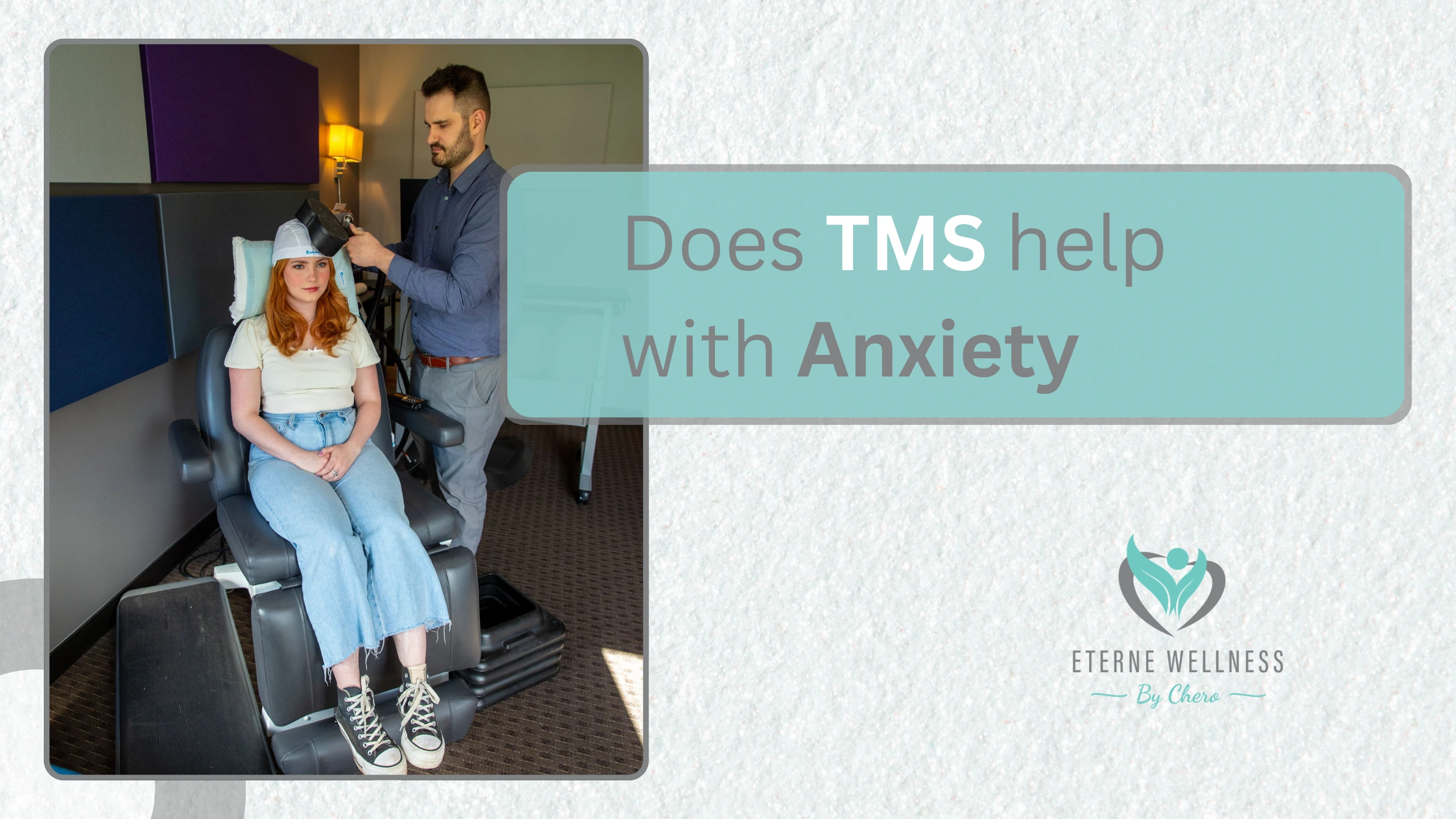
You sit in a chair. A device is positioned near your head and you feel a light tapping sensation on your scalp. That’s about as dramatic as it gets. Afterward, you drive yourself home.
The comparison people use most often is an MRI machine – same type of magnetic field, far more focused application.
Why the Brain Angle Matters
Most conventional anxiety treatments work around the brain. Medication adjusts the chemical environment. Therapy reshapes thought patterns.
Both are genuinely useful – but neither one directly engages the underlying neural circuits driving the problem.
TMS and anxiety treatment works differently because it works inside the system.
It’s not managing the symptoms from the outside. It’s influencing the actual activity in the regions responsible for how anxious you feel.
That’s a meaningful distinction, and it’s why some people who’ve spent years in therapy or cycling through medications find TMS does something nothing else did.
What Type of Anxiety Treatment Is TMS, Exactly?
People ask this a lot, and it’s a fair question – because TMS doesn’t fit neatly into the categories most people know.
Understanding what type of anxiety treatment is TMS starts with knowing what it is not:
- It’s not medication
- It’s not talk therapy
- It has nothing in common with electroconvulsive therapy (ECT) beyond the fact that both involve the brain
TMS is categorized as a neuromodulation – treatment that changes how the brain functions through external stimulation.
What that means practically:
- Nothing enters your bloodstream. There are no systemic drug effects, no chemical adjustments, no withdrawal to worry about later.
- There’s no downtime. People come in for a session and head straight back to work, to their kids, to the gym. Normal life continues.
- It’s outpatient. A standard course runs five days a week for four to six weeks, in sessions that can be as short as three minutes depending on the protocol.
- It can work alongside other treatments. TMS doesn’t replace therapy or medication if those are helping – it can complement them.
The short version: it’s brain-level treatment without the baggage that usually comes with trying to change how a brain works.
Does TMS Work for Anxiety?
Does TMS work for anxiety? Yes – with some important context.
Formal approval by the FDA includes Major Depressive Disorder and OCD.
However, TMS has been researched and applied in clinical practice in generalized anxiety disorder (GAD), panic disorder, social anxiety, and anxiety comorbid with depression.
The findings of a meta-analysis, published in 2019, in the journal Human Brain Mapping, found that TMS can be a viable solution to GAD and PTSD.
A more recent systematic review found that TMS produced large effect sizes in adults with GAD.
Equally meaningful is how long results hold. Many patients report continued improvement after their course ends. The brain isn’t just temporarily suppressed – it’s learned a different pattern.
TMS Treatment for Severe Anxiety Disorder
For people with mild or moderate anxiety, there are several roads to feeling better.
But for someone dealing with severe, treatment-resistant anxiety – the kind that’s been there for years, the kind that hasn’t moved despite everything – TMS treatment for severe anxiety disorder is a different kind of conversation.
At Eterne Wellness, we’ve sat with patients who came in having already tried four or five medications, years of therapy, and multiple approaches.
Some of them had started to believe that this was just how they were wired. In many of those cases, a personalized TMS protocol produced results that nothing else had.
That’s not a marketing claim. It’s what happens when you treat the brain directly instead of working around it.
One thing we always make clear: severe anxiety is rarely one-dimensional. It often overlaps with depression, trauma, OCD, sleep problems, and more. That complexity is exactly why every treatment plan at Eterne Wellness is built from scratch around the individual.
What Non-Invasive Is
The phrase non-invasive anxiety treatment gets used a lot.
But for people who’ve had real, frustrating experiences with medication, it means something specific.
Think about why people stop taking anxiety medication. It’s usually not because it stopped working completely – it’s because of what comes with it:
- The weight that crept on and didn’t leave
- Feeling emotionally flat, like the volume on everything got turned down
- Sex drive disappearing without warning
- The anxiety that comes from worrying about stopping because withdrawal is its own ordeal
- A second medication to handle the side effects of the first
TMS has none of that. The most common side effect is a mild headache after some sessions – temporary, manageable, and not experienced by everyone.
There’s no systemic exposure, no dependency risk, and no tapering process when treatment is done.
For people who’ve been through the medication cycle and come out the other side exhausted by it, that’s not a minor detail.
It’s often the reason they’re willing to try something new at all.
The Bigger Picture: Magnetic Therapy Benefits Beyond Anxiety
Anxiety rarely exists on its own.
Most people who come in for anxiety treatment are also carrying sleep problems, concentration issues, emotional reactivity, and sometimes trauma.
That overlap is actually one reason magnetic therapy benefits tend to surprise people — because they tend to address more than the primary complaint.
Here’s what patients commonly report improving alongside anxiety:
- Sleep. Chronic insomnia and anxiety are deeply connected. TMS has shown measurable effects on sleep quality in people who’d stopped expecting to sleep well.
- Focus and mental clarity. Brain fog isn’t just a depression symptom – it runs alongside anxiety constantly. Many patients notice sharper thinking as treatment progresses.
- Emotional steadiness. Not numbness – actual regulation. The ability to feel something without it immediately escalating.
- PTSD symptoms. For people whose anxiety has trauma underneath it, TMS’s effect on the fear-processing regions of the brain can be particularly meaningful.
- OCD-related thought patterns. The intrusive, looping thoughts that fuel so much anxiety can lose their grip over the course of treatment.
These aren’t side benefits. They’re connected. When the underlying brain activity starts shifting, more than one thing tends to shift with it.
TMS for Anxiety at Eterne Wellness
There’s a version of TMS that most clinics offer. Same protocol for everyone, same coil placement, same frequency, same duration. It works for some people.
For others, it doesn’t – and when it doesn’t, those patients walk away thinking TMS just isn’t for them.
That’s not what happens here.
TMS for anxiety at Eterne Wellness starts with the understanding that no two brains are the same – and that a treatment plan built for a general population isn’t the same as a treatment plan built for you. Here’s what that looks like in practice:
- Coil placement is mapped to your anatomy. Not an average. Your actual brain.
- We adjust as we go. If you’re not responding the way we’d expect by week two, we’ll change the protocol. We don’t wait until the end to evaluate.
- We use theta burst stimulation when it fits. This delivers stimulation in a pattern that mirrors the brain’s own learning signal. Sessions can be as short as three minutes. Results are often stronger.
- Accelerated TMS is available. Ten sessions a day for five days, rather than six weeks of daily visits. For patients who can’t do a standard schedule, or who need results faster, this is a real option.
- We integrate with other treatments when it makes sense. TMS works alongside ketamine therapy, medication management, and IV infusions – and we think about the full picture, not just the single modality.
The difference in outcomes is not subtle. It’s why our numbers look different from industry averages.
TMS Treatment Success Rate: Being Honest About What to Expect
Nobody wants false promises. So here’s an honest look at the TMS treatment success rate:
- Across most standard TMS providers, success rates for depression and anxiety fall somewhere between 50% and 80%. That’s a meaningful range, and where someone lands in it depends heavily on how the protocol is designed.
- At Eterne Wellness, our personalized approach reaches a 92.5% effectiveness rate when treatment is fully personalized. That’s not an industry-standard number. It’s ours, and it reflects the difference personalization makes.
What actually affects your outcome? The severity of your anxiety matters. How long you’ve had it matters. Whether other conditions are involved matters.
And how closely your protocol is built around your specific situation matters – probably more than any other single factor.
That’s the whole reason we don’t skip the evaluation. It’s where good outcomes start.
Who Should Actually Consider This?
TMS isn’t for everyone. But it’s probably worth a real conversation if:
- You’ve tried at least one medication for anxiety and either it didn’t work or the side effects made it not worth it.
- You’ve been managing anxiety for long enough that you’ve started to feel like this is just who you are – and you’re not ready to accept that.
- Your anxiety comes with depression, PTSD, OCD, or trauma.
- You want a treatment that doesn’t involve adding more to your bloodstream.
- You don’t have metal implants near your head, a pacemaker, or a history of epilepsy.
If you’re not sure whether you’re a candidate, that’s what the evaluation is for.
We’d rather have an honest conversation than have you rule yourself out prematurely based on incomplete information.
What to Expect When You Come In
A lot of people expect something clinical and uncomfortable. Most walk out after their first session, saying it was nothing like what they’d imagined.
Here’s what actually happens:
- You come into our Las Vegas office. The rooms are calm. Nobody is rushing.
- The TMS coil gets positioned near your head – based on your anatomy, not a standard measurement.
- The stimulation starts. It feels like light, rhythmic tapping on the scalp. Noticeable, not painful. Most people tune it out within a few sessions.
- Depending on your protocol, the session lasts anywhere from three minutes to around 40.
- You leave. Drive yourself. Go wherever you were going next.
No recovery. No grogginess. No lost hours. The most common complaint we hear afterward is mild head soreness and even that fades quickly.
If You’ve Read This Far, You Already Know Something Is Worth Exploring
Living with anxiety is just exhausting. The thoughts that won’t stop. The sense that your nervous system is always braced for something that may never come.
You don’t have to keep managing it. You can actually treat it.
At Eterne Wellness, we build every TMS protocol around the person in front of us – your brain, your history, your goals. We’ve watched people who’d lost hope find their way back to themselves.
Call us at (725) 895-9300, or visit eternewellness.com to book your evaluation.
A Few Questions We Hear a Lot
How quickly will I notice something changing?
Some people notice it early – by the end of week two, sleep starts improving or the background noise of worry gets a little quieter.
For others, the shift is more gradual and shows up clearly in the weeks after treatment ends, as the brain continues consolidating what happened during sessions.
It’s different for everyone, and we track your progress throughout so nothing gets missed.
Does insurance cover this for anxiety?
Standard TMS is covered by most major insurers for FDA-approved indications. Whether anxiety specifically is covered depends on your plan and how it’s coded.
Our team navigates that with you before treatment begins.
Can I keep taking my current medication?
Usually, yes. TMS doesn’t interact with medications the way treatments sometimes do.
